Showing posts with label Health. Show all posts

Friday, December 17, 2010

Buses with Bathrooms?

Here's the question:
Planning on teaching in Korea (of course English) and hoping to travel all over the country. What I am concerned about is the long trips (3 hours or over) that you have to take on bus rides. Do these buses have bathrooms? I heard that during these trips people like to eat and specifically drink? During a bus ride and let's say for lack of a better word have to pee or even worse go #2, what do people do during these types of situations?
I'm a big fan of bathroom-related questions. You can tell a lot about people, cultures and history based on their bathroom habits, jokes and facilities.


I personally stay away from a lot of bus travel for this very reason. First of all, no buses available to the general public have bathrooms on them. Instead, the driver will pull into a very busy rest-stop at the halfway point on most trips over 2.5 or 3 hours. Of course, not everyone has the exact same bladder functions and this presents a problem. 


In all honesty, you have one option: begging the driver to pull over


In most cases, they will. It's not totally uncommon to see a bus in the shoulder and a lone passenger ducking behind the bushes. It's embarrassing for sure, but much better than, say, pooping in your pants.


Koreans have largely gotten used to this arrangement and since they're also the world's greatest transit sleepers, they generally doze through the entire process. 


In other words, make sure that you're empty before the trip and don't booze too heavily the night before.

Sunday, June 20, 2010

Why do Koreans smoke so much?

Here's the question:
Why do Koreans smoke so much? I'm from Delaware and am very used to a non-smoking environment. This is a disgusting shock.
For those who don't know, Delaware banned smoking in public workplaces almost a decade ago, so I imagine coming to Korea would be quite the shock. Some foreigners love it and others hate it, but Koreans are all used to it.


Korean men do smoke an awful lot (a trend increasing among women as well). It's hard to walk into a building or a bathroom without catching a whiff of it and while the government is trying to broaden their ban, it doesn't seem to have much of an effect on the prevalence. There are a lot of reasons why smoking among men is so common in Korea.


Military


Aside from the youthful temptations, curiosity and peer pressure, young Korean men must face the most difficult smoking challenge: military service. Up until the mid-nineties, cigarettes were provided to young soldiers along with their coffee and tea. The brands changed (Hwarang, 88, This) but they were free and presumably included in their Type 3 rations. Now, cigarettes are no longer provided, but they are offered at a discounted price. Of course, you don't have to smoke and while no one is forcing you to indulge, those who opted for healthy lungs often got stuck doing more work than their smoking counterparts simply because when you're smoking you're not working. As a result, many young men pick up the habit in the military and when they rejoin civilian life they have trouble shaking the addiction.


Self-Expression


If you were to ask a Korean why so many people smoke, they'll say that stress causes them to do it. Some will offer fun excuses like "I'd be much more unhealthy if I couldn't relieve my stress through smoking", but we know that doesn't make sense. Smoking might dilute the physical response to stress yet it does nothing for releasing stress or curing it. Everyone all over the world is stressed. Korea has not cornered that market. What's really at issue here is that Koreans typically don't use proper avenues for releasing stress. Instead of expressing themselves and sorting through the problems, many of them hold onto it (or jump off a building). 


Koreans might seem emotional when it comes to their national pride, but when it comes to themselves or their loved ones, silence is the answer. The reasons for this is a whole different topic in and of itself. In short, the curse of respect shines through. Burdening others with your problems is viewed as disrespectful and selfish. Throw that in with the fact that the Korean language is anything but loving and tender and you have a cocktail ripe for stress. And without a release for their stress, they look for ways to dampen it. Enter tobacco. 


Leisure Time


Yeah, Koreans don't have any. Sure they might go to Jeju for the weekend or a day trip on the slopes, but in general, Koreans do not have a leisurely culture. Because of this, they seek very quick and gratifying solutions. Smoking, drinking, room salons, sexy bars, kissing rooms, screen golf, PC rooms, game rooms and singing rooms are all quick ways to get your jollies. They can move from one to the other in a relatively short amount of time. It's a 빨빨 culture that prides itself on its pace. When generation after generation seeks this type of gratification, smoking will always find its way into the fold. In my building, there's an office where the men take smoke breaks every thirty minutes for ten minutes each time. If you do the math, you soon start to realize why they have to work such long hours.


Work Life vs. Family Life


This is a simple one. Work life is very important to the Korean man. If he's under fifty then you can assume that he'll be working everyday and most nights. It's not that he wants to spend time away from his family, but he has to if he wants to climb the ladder. When family is not the center of your world, then priorities change. At home, you typically want a nice, clean, quiet, peaceful and pure atmosphere that you have some sort of control over. At work, however, it's a fast-paced late-night drinking, smoking orgy of opposition to the atmosphere desired at home. By the time one reaches his fifties and is still smoking, they might say something like one of my older Korean friends did just the other day.
"Look at Korean life expectancy compared with nations who smoke less. Korea is higher than many of them."
 Cost

And finally, my biggest obstacle: cheap smokes. One of the first thing foreign smokers realize when they get to Korea is that cigarettes are cheap. I remember being pleasantly surprised by this when I first arrived. Except for a few places in SE Asia, it's hard to find Marlboro's for less than three bucks a pack. I'm sure there's some data somewhere to back me up or disprove me, but I'm willing to bet that the smoking rate would drop pretty quickly if the cost of smokes jumped to UK or Canada-level. Personally, I'm still wondering when the health care system will start to take a hit from all the smoking-related illnesses that are sure to continue increasing. (Smokes haven't increased in price since the year 2000. Someone's going to have to pay for the poor health of smokers.) Either way, the low cost is certainly keeping some potential quitters off the fence.

You certainly noticed that I only focused on men. Women and smoking in Korea is an interesting topic and while I'd love to tackle it in my own way at some point, we'll allow James from The Grand Narrative do what he does best and continue on with this topic.

Tuesday, April 6, 2010

Koreans and Exercise

Here's the question:
I'm planning to live in Korea soon. And I was talking to some friends who studied abroad there recently. They tell me that unlike America, Koreans don't jog or run in the streets. I'm from Madison which is a very heavy biking and running city. I love to run outdoors and lift weights. I was wondering how Koreans exercise? Do they even exercise? One of my friends told me that they don't really exercise, but instead just eat less and diet. From the international students I see here, majority of the korean students are very fit. I was wondering if you had any knowledge on exercise in Korea.
Your friends are right. Koreans don't run, jog, speed-walk or bike on city streets.  It would be nearly impossible to do so anyways. I typically am out running or biking with my dog at 5:00am and even at dawn, I find it difficult to get in a solid workout without being interrupted by traffic, drunk twenty-somethings, trash or, my personal favorite, the puddles of vomit --or "pizza" as  Koreans call it-- which are flung all over the sidewalks.


They do, however, do a lot of exercising in other areas. There are countless gyms blanketing most cities that are usually pretty active from open to close. In most towns and cities, there are small parks that have body-resistance exercise machines. Those seem to be the most popular with the older crowd and especially with the ajummas. And if that wasn't enough, scores of ajumma can be spotted grouping together near any major waterway for some only-in-Korea-would-this-pass-for-exercise aerobics slash white-gloved hand movements. 


On the weekend, you'll find that most of the city parks are swamped with people of all ages exercising. They're riding bikes, running, jogging and walking dogs. Sports fields are full of people playing soccer, basketball and baseball. I like to play tennis and usually have to make a reservation nearly a month in advance is I want to play. In the summer, the rivers and lakes are bustling with skiers, windsurfers and jet-skiers. In the winter, you'll find it pretty packed on the slopes as well. Koreans certainly exercise, just in acceptable venues and the street, for the most part, is not acceptable.


I can't find it now, but I read a couple years ago that the average Korean child gets twelve minutes of exercise a day compared with the forty-eight minutes the American child was getting. In fact, it's getting so bad that child obesity in Korea is nearly double what it is in Japan and rapidly approaching America's rate. The adult rate obesity rate is getting pretty bad as well, but that's what happens when you work late and eat dinner even later. 


I guess dieting or eating less would be one way of staying slim and Koreans are just as apt to fall for diet trends as the rest of the world is (see the Japanese banana diet), but I think most people here (outside of Gangwon) see the value of an honest workout and a healthy diet -even if they are snobby about their foods' health benefits and/or superiority. 


Oh, and in case you're wondering where I've been, you can visit The Pious One...

Thursday, February 25, 2010

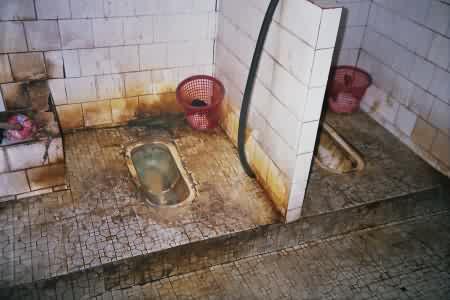
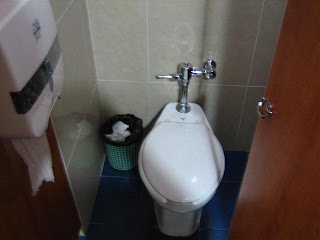
Korean Bathrooms: A Photo Diary

Here's the question:
My name is Bernal and I am 28 years old. I developed IBS (irritable bowel syndrome) a few years back. Thanks to that I feel uncomfortable at places without bathrooms. So every time I go to a place the first thing I do is try to find the nearest bathroom, and when I located it, I feel better.  I will go to Korea in June for a while. I was wondering if you can tell me how often you can find a bathroom in Seoul, and if is true that since the world cup, is some type of law in which allows any foreigner to use any public bathroom, even buildings and stuff.

I'm from Guatemala and here you dont find public washrooms.. only restaurants and stuff like that.
That sounds pretty awful, Bernal. There's nothing better than a spastic colon on a hot June day here in Seoul. 

Determining bathroom locations is also a pastime of mine, but not because I have to poop a lot. My concern --while drinking usually-- is that I'll only have to go to the bathroom if I don't have the luxury of a bathroom. I think I developed this problem in college on backpacking trips. Before we started packing, I would try to force myself to poop so I wouldn't have to poop on the trail. I was fine dropping one at the campsite, but the hike-poop was always rushed and uncomfortable. 

Bathrooms in Seoul are actually quite common. Depending on where you are in the city, you should be able to find some sort of public restroom within a minutes' walk. Some will be clearly marked with directions and others will be more allusive. The trickiest ones to spot are the ones that hide in the three or four-story "villas". There's usually a sign on or in the building somewhere that says "화장실". If not, just ask someone and they'll point in the right direction. Honestly, I've never had a problem. Even at the park, there are toilets all around.


Some Photo Warnings...


 They don't care if you're there or not.


They're not all like this one, but...


http://maggiesmeanderings.files.wordpress.com/2008/08/chinese-toilet.jpg

 ...they're not like this, either.


http://farm1.static.flickr.com/72/179622555_c62ca4b2b6.jpg?v=0

This is pretty common...


https://blogger.googleusercontent.com/img/b/R29vZ2xl/AVvXsEghA5knGsTebR8Cc4jFjsB_WwRFpb1fPbHVIgL9UKUKYquW7bjZPQimtxJOcRiYstB5yxyOihOEPBaRyl6EzotmIdZJn_j0zFBToEiRFszpoYp75178xy1wSS0chk6Huyh4Pue4Gpr7rB0/s320/IMG_7936+(Small).JPG 

 ...but this is the norm.


http://www.itravelnet.com/photos/eu/greece/rhodes/rhodes-old-town/no-toilet-paper.jpg 

Confused? Don't be. 


http://kristin.seidelmann-owners.com/fofc/no_paper2.jpg

Just drop it in that trashcan.


https://blogger.googleusercontent.com/img/b/R29vZ2xl/AVvXsEiootSTb1fOHUovhJMF2nSjTIdzogWFJcKrm-8Wp8Mv-cem66W1G50Blgcc1dkhtZ3rMSZMBAoTdXJULpXV_Q3Lh5sXz6WlOeIbNG1ar8TdgDxG5CdVN8QjZ30NPtxkvnv0LlvgefI9G9IP/s320/soap.jpg

Get used to it...


http://antoniofarinha.com/blog/wp-content/uploads/2009/03/smallest-bathroom-sink.jpg 
...but there probably won't be any soap, anyways.


http://images3.iwilab.com/shared/item/1/107/107945_500x.jpg

Don't kid yourself. There will be plenty of smoking.


 http://images.veer.com/IMG/PIMG/DVP/DVP4972839_P.JPG

Just not much toilet paper.


http://cache.gawker.com/assets/resources/2008/05/urinal.jpeg 

 Accept it.


Monday, November 23, 2009

Why do schools leave the windows open in winter?

I have been quite busy fielding hate mail from my recent article in the KT. Good stuff, guys.

Here's the question:

Why do some schools open the windows and doors in the hallways in the winter? My school opens nearly half the windows and doors to the outside even when it is near freezing. This is hard for me to comprehend because a) it's a major waste of heat/energy b) everyone is wearing sandals and c) they are worried about students getting sick, and a cold school is a good way to make students sick.
I've always wondered the same. I used to hate being in public schools (or even some hagwons) during winter. There's nothing worse than sitting down on that ice-cold toilet seat. I remember how cold the stairs were in my first hagwon. Brutal.

My best guess is just that, a guess. It wasn't too long ago that many schools in Korea used space-heaters and other styles of old ovens in the classrooms. There was no reason to heat the hallways since students spent most of their time in the classrooms. I guess.

You raised some good points as well. It seems like it's a major waste of energy and you could argue that well, but most of the schools I've been in don't have any heating units in the hallways, so at least the heat isn't pouring out. Of course, the classrooms are connected to the hallways which would certainly reduce the warmth in the classrooms. So yes, it's a waste.

The kids do wear sandals or slippers in most schools and it seems that the cold air in the school could lead to an increase in illnesses. I guess we could assume that this practice is supposed to curb outside germs from getting inside which is highly debatable, but I think it also decreases the need for teams of janitors in schools. Less dirt (which most schools have fields of) on shoes would decrease filth. Regardless of the reasoning for the slippers, I'd like to see some comparative illness stats before assuming that it leads to more sicknesses. It makes sense to me though.

I also think it's perfectly reasonable to assume that a cold, drafty school is a potential health hazard, but I have a feeling that some school officials believe that by leaving the windows open, the bacteria, germs and viruses will be sucked out by or killed by the cold.

Anyone else have any ideas?

Tuesday, November 3, 2009

Is Swine Flu Paranoia Justified?

Here's the question:

Do you have any idea about what are our rights when it comes to swine flu? Like for example, my friend got sick, and her school made her go to the hospital, where they injected her with multiple things--she has no idea what--and then gave her several unknown drugs to take. A week or so later, she still had a cough, so they made her go back to the hospital, where they gave her Tamiflu, and her school ordered her to take it. I'm not sure how much you know about influenza or Tamiflu.....but that was the most illogical move imaginable. She even got tested for swine flu, and the test says she doesn't have it!

Will I get deported if I don't let them inject me with things? Can your school order you to take drugs? I'm so scared!
I knew this was going to happen. A couple weeks ago, I had a sick teacher who claimed he had a fever. Fair enough, so he stayed home. When I told my boss we had a sick teacher, the immediate reaction was that he had to go to the hospital to get tested for swine flu. I calmed the situation by taking a possible gamble and saying that he didn't have a fever or flu-like symptoms. Of course if he did have H1N1, I could have been risking the health of co-workers and students, but I presumed he didn't and was correct.

I did that (and perhaps it was wrong, but I'm no bioethicist) and avoided my teacher being forced to the hospital and my institute being closed for a week or so. However, this situation raises some serious questions: Can an employer force an employee to be vaccinated? Is it a business decision, government policy or genuine health concern?

And if an employer forces an employee to stay at home or go to the doctor against their will, should they be compensated for the missed wages or any incured costs?

Big questions really. I understand that a school might need to close its doors for a week or so, but only in the case that students' have been confirmed to have had contracted the virus. Many public and private schools have done this. If a teacher contracts it, then they need to seek treatment and be absent from school. I also don't see a problem with an employer forcing an employee to get tested for the virus. Payment is a different story and I imagine each school is different.

Treatment is another animal.

The title of the questioners email was "Swine Flu Madness" which was reminiscent  of our beloved Mad Cow protests a couple years ago. This fear, however, is infinitely more legitimate  and grounded in genuine concern and not politics (unlike the US). Last week alone, the number of cases more than doubled in Korea and have shown no signs of slowing. (Here for wolrd trends.) That trend is quite troubling from a public health stance and, if you look at its effects on the ground, the reality of the public's fear is becoming real and a strain on private education.

I know that enrollment is steadily (and probably temporarily) decreasing in many cram schools. I understand that 수능 is around the corner, but I fear that after the tests, some hagwons will have drastic drops in enrollment. My classes, which are usually packed, are hovering at 70% what they used be and even enrolled students are staying home. While it doesn't affect my pay, it's devastating to the school and since I'm the manager, this is a problem for me. If one of my teachers was ill with swine flu-like symptoms, we would certainly force encourage them to get the proper treatment as prescribed by Western medicine. They could refuse of course, but at the same time it would be totally irresponsible of  me, the teacher and the school to allow that teacher back in the building before they're cured. The main goal is containment.

In the end, I think that schools have some ground to stand on when forcing teachers to be vaccinated or treated. There is nothing wrong with a school asking you to get tested and if you have something, get it treated...for yourself. WebMD doesn't have all the answers.

So, let's get to your questions:

If your friend doesn't have swine flu and is certain of that fact, then tell her not to take the medicine. There is a chance though that the doctors are not being "illogical" and that they -perhaps- might know better than say, a teacher?

I don't think that you can be deported for not getting shots, but a school could fire you which would lead to a cancellation of your visa. Sounds harsh, but make sure you get tested for the flu first. If they try to stick you with something BEFORE knowing what you have, then I would be suspect. Again, I don't think schools are wrong for being paranoid. This is not only a financial issue, but a public health issue as well.

Also, your school should not be able to force you to get shots without having any traces of the virus. As of now,  the "health ministry said inoculations will be administered first to medical staff, patients, the elderly, pregnant women and infants." You are not in that category, but you do have a lot of exposure. No one can force you to take medicine except yourself. If you believe that you do not need medication, then don't take it. They won't be pinching your nose, Indian Jones-style.

Let me finish up with this question for you guys as I know some of you are on flu vacation:

If an employer forces an employee to stay at home or go to the doctor against their will, should they be compensated for the missed wages or any incured costs?

Saturday, October 24, 2009

Love Sticks and Corporal Punishment Revisted

Yesterday, I wrote about "love sticks" and while I still maintain that parents who employ such methods are devoid of expression and patience, the study and video I included suggested that parents who spank or smack their children ran the risk of lowering their kids' IQs and this is proving a bit problematic for me.

Essentially, it's saying that...

Corporal Punishment = Lowered IQs


That's way too simple for me, so I prefer this:

Corporal Punishment + __________ = Lowered IQs


The missing link is quite nuanced though and I should add that this was an American study, so applying it to Korean households doesn't really work as well. That missing link might be that the environment at a home where corporal punishment is taking place is not a very nurturing one. There are many more problems there other than discipline. As I said, I strongly believe that parents who resort to physically disciplining their kids totally lack the communication skills and patience to properly express themselves, so they hit. It's very human, yet overly animal-like.

We could jaw for hours about what that missing link is, but as one of my Korean friends said last night,

"Why does the result have to be lowered IQs? Koreans have the highest IQs in the world and our parents used love sticks."

Corporal Punishment = Higher IQs


Of course, this summoned my KDS and like most cases where the syndrome surfaces, it turns out that he was right. Koreans, on average, actually do have the highest IQs in the world with Kim Ung-yong leading the world with a verified IQ of 210.

Of course, we'll need to figure out that missing link again.

Corporal Punishment + __________ = Higher IQs


I'm not qualified to get into this matter except for saying that perhaps the Korean education system, with it's emphasis on math and science helps give Korean IQ test-takers an advantage. Korea students are typically not allowed to use calculators or formula sheets when doing math. They have to understand why 2+2=4, unlike their American counterparts who only need to know how to type an equation or formula into a calculator. That, and the fact that Koreans are master test-takers.

Again, I'm not the best person to be talking about corporal punishment. I'm just a guy who dribbles about Korea and expat issues. This is a bit out of my league and, honestly, my interests. All I know is that my Korean wife and I have discussed this and neither one of us are going to be heading to the love stick store in the future.

Friday, October 23, 2009

Spanking and Love Sticks

Here's the question:

I teach in a private academy and am probably naive, but I read about a "love stick" in the Korea Herald the other day and was wondering if parents knew about the use of them as well.

You are being naive and I assume you're talking about Brian's piece on "Discipline in the classroom."

"These days corporal punishment in school is technically illegal, though still widely practiced. However, both the larger size of students and the widespread possession of cell phones with cameras has made teachers think twice before using the "love stick."


The use or sight of the love stick or "사랑의 매" is extremely common in Korean schools. But as Brian mentioned, kids are using their phones as protection against their use. YouTube features some pretty brutal videos of corporal punishment in Korean schools. I should point out that not all objects used to hit students are officially love sticks. While some teachers clearly prefer love sticks and brooms, others go for bamboo sticks or the good ol' fist.


You and I know that abusing children is disgusting and should result in jail time, but as the quote above says, schools usually try to circumvent law or superficially ban the practice by outlawing cell phones in class. Just this year, a student was flogged over 100 hundred times on the feet only to go home and commit suicide. The punishment was for being absent from the after school study session that all high school students are required to attend. The story here is not that a teacher hit their students, but the level of acceptance that the other students displayed.

"Students in the school told the investigators that the degree of punishment the student received actually "wasn't too harsh" compared to the "usually very harsh punishment."
Throw that in with this 2004 study and you've got a majority of students who simply are not all that affected by this abuse.

최근 한국사회조사연구소가 전국 272개 초·중·고교생 8100여명을 대상으로 설문조사한 결과에 따르면 응답자의 79.6%가 '올해 교사에게 체벌을 당한 경험이 있다'고 답했다. 응답자의 15.8%는 자주 체벌을 당했다고 답했다. '체벌 경험 비율'을 연도별로 살펴보면 △1998년 93.7% △2000년 85.0% △2003년 86.3% △2004년 79.6%로 학내의 체벌 문화가 점차 개선되고 있는 것으로 나타났다.

That says that 79.6% of respondents experienced some sort of physical punishment while in school. It's clear that the numbers are going down, but 79% isn't in anyway a low number. (I couldn't find a recent stat.) Why so common though?

I blame the parents.

First of all, parents often times buy these love sticks for teachers as a signal that beating their child (if necessary) is okay with them. I have seen many love sticks in my years in this industry and teachers usually have a few of them in their classroom. Some of them might be in plain sight and others might be in a closet or desk drawer. They're there though and if the parents are giving them to teachers, you can guarantee that they have them at home as well.

Secondly is the fact that companies actually specialize in selling these sticks.


Look at that picture. It's actually not the official "love stick", but rather a "discipline stick". The very fact that these are being sold is a pretty huge indicator that it's still quite prevalent. However, not all parents spend money on these sticks. Some make them themselves and force their kids to take pictures with it.


"Smile or I'm going to hit you!"


I have yet to find more than a handful of adults who have not experienced some sort of corporal punishment from their parents. Some got popped with a shoe horn and others got the ladle. Without jumping into Confucianism in Korea (which really tires me out), let's just say that it's what today's parents learned from their parents, so they do the same thing to their kids. Stuff Korean Moms Like has a more playful take on the whole thing as well.

Face it, many of us have been victims to some of the classic forms of Korean Mom punishment. Whether you were forced to kneel and carry a large bucket of water above your head for hours at a time, told to go and collect your own whip/switch from the backyard, or simply stand with your hands in the air, just know that the worst is not yet over my friend. You can never outgrow Korean Mom punishments. As long as she is able bodied enough to wield a tree branch, a rice paddle, or raise her voice, she will punish you.


I assume that in twenty years, this too will be a thing of the past. After all, Jesus started it.


I must say though, it's easy for me to shit all over Korean parents for this practice, but the truth is that it's not limited to Korea. Sure, the love stick seems to be part of Korea's "unique culture" and we "must understand", but American schools did the same thing as did parents. I wasn't ever hit or spanked by my parents, but I do recall my mom threatening to "wash my mouth out with soap" every time I brought home a new bad word from school.

I think the best way to get this practice to stop is for the Korean media to publish these results.


If only we could tie-in lowered 수능 scores then I'm certain the abuse would stop.

In the end, it's more about the lack of a nurturing environment at home that usually accompanies this type of discipline. The abuse is just part of a whole range of parental failures and hopefully the next generation of Korean parents will pick up the slack.

So, yes. Parents are very aware of what's going on.

Monday, October 19, 2009

Herpes and Health Checks

Here's the question:

I have a question about the health check for the E2 visa. Do you know how detailed the blood tests are? Are they only looking for HIV/AIDS or will they also be concerned with HSV1/ HSV2 (the 2 types of herpes)? These are conditions that also come up in blood work, but do you know if they are looking for them? Or if found, would it result in termination of your contract??


I wrote about something similar to this before, so check that out as well.

The blood tests are only looking for HIV/AIDS, tuberculosis and narcotics. At least, that's the stated purpose of the tests. However, the main goal is to detect communicable diseases which, if found, will result in the termination of your visa and contract.

I don't think we're talking about simple cold sores here. The question would not have been posed over a little sore. I assume that since the questioner is asking about this, it's safe to assume that they personally have one or both types of herpes (or are asking for a friend). I don't want to judge this person's character because contracting an STD is a tragic story in many cases, but it's also an avoidable consequence of careless behavior in others. I hope that this case isn't the latter and that we are dealing with a responsible person who is not trying to slide under the radar.

From what I can gather, simple blood tests will show the presence of HSV, but it's difficult to determine whether it's the not-so-horrible kind (HSV1 or cold sores) or the holy-fuck one (HSV2 or genital sores). Even though both can cause oral or genital herpes, HSV2 is much more painful and just plain unsightly.

Let's pretend that the test didn't reveal the presence of herpes and since the doctor doesn't give you a physical or anything, you might get away with it. Of course, that plan might backfire and you could be sent packing at your expense. The rub here is more ethical though.

You will be asked if you have a communicable disease. In fact, you'll be asked five questions:

* Have you ever caught infectious diseases that threaten Public Health before?
* Have you ever taken any Narcotic (Drug) OR Have you ever been addicted to alcohol?
* Have you ever received treatment for Mental/ Neurotic/ Emotional Disorder?
* Are OR were you HIV (AIDS) positive?
* Have you had any serious Diseases OR Injuries for the last 5 years?


In this case, the questioner has caught an infectious disease and therefore has a responsibility to answer honestly. My advice is to consider teaching elsewhere. I know that might sound harsh or like I'm discriminating against people with STD's, but the law is very clear about who does and doesn't medically qualify and having genital or oral herpes certainly disqualifies an applicant.

Friday, September 25, 2009

Should we frequent small, sleepy restaurants?

Here's the question:

I've noticed that restaurants are everywhere here, but it seems that the tendency is for people to frequent those in high-traffic areas. There are restaurants throughout the side streets I've wandered, but I don't often see anyone in them. So, I was wondering how safe it is to wander into these off-the-beaten-track restaurants? Can they be a source of great food finds, or are they usually just serving what I can get in the places where everyone else goes?


I can't remember where I read it, but someone said (and I'm paraphrasing), "Koreans don't go to a specific restaurant, but rather they go out for a specific dish." That's dead-on, but doesn't necessarily mean that people don't frequent restaurants with good reputations. It means that if people want galbi, they're going to find some restaurant (probably local) that serves it.

Honestly, I love wandering into the sleepy looking restaurants. While the food is usually just as good as the busy establishments, it's the service that typically stands out. Extra side-dishes is a win-win for me which, ironically, is my biggest issue with these small restaurants.

Many of you know it or have at least thought about it before (just as many Koreans have): Do they really throw away uneaten/untouched food?

I suspected that they didn't and very, very unfortunately, I was correct. It was and still is a very common practice. Luckily, in July of this year, the Korean government thankfully decided to fight back against the insanely unsanitary way of saving a buck and sanction any restaurant that is caught reusing it's food. Despite swine-flu paranoia, I have a feeling that the practice will continue as long as food prices are increasing and the recession drags on.

I encourage everyone to frequent the small establishments. My favorite part of Korea is the insane amount of restaurants that are found on every street in every pocket of every city on the peninsula. If we all stick to the big places, then much of the charm of Korean eating culture will deteriorate to the point that franchises will take over and then I will be forced to leave the country. Also, they have the best kimchi.

So, get out there and check out the small joints and I'm sure you'll be pleasantly surprised. If you want more of a food guide for everything else, make sure you see what Zen Kimchi, Fatman Seoul and Seoul Eats have to bring to the plate.

Wednesday, September 23, 2009

Cigars in South Korea

Here's the question:

First, I am a smoker. Not a cigarette smoker, but a cigar smoker. I am not an avid smoker...I can survive without cigars...but I would like to know how cigars figure into Korean culture. I've noticed that there are plenty of cigarette smokers around (all males, it seems), and I haven't noticed any kind of smoking ban (although no one seems to smoke in restaurants - thankfully). However, what I'm asking is: Does anyone in Korea smoke cigars (real cigars - not the ones from the convenience stores)? Does Korea have any cigar stores/shops? Are cigars expensive here (U.S. prices range from $5~$12 for a typical cigar)?


Smoking in Korea is pretty much second-nature. Korea boasts one of the highest numbers of cigarettes consumed per capita and cigarettes, despite being responsible for the rise in heart disease and lung cancer, have largely escaped the heavy tax that many other nations have levied in hopes of curtailing the deadly habit.


As far as most smokers being male, I agree to a point, but it is certainly becoming more common to see young women lighting up in the confines of a smokey bar or hof. Some of the bolder ones are sucking down on the streets as well. However, there are still a lot of rules and some taboo-elements when it comes to smoking in public. For instance, many Korean males will not smoke in front of their bosses. Of course, the boss doesn't care that their employees smoke, yet subordinates continue to file out the door and out-of-sight to light-up. Much like many Western families, it's also rude to smoke in front of family members. I assume that many of these practices will become obsolete in time. Further, I'm not too sure what restaurants you happen to be eating in, but I would be hard-pressed to find one that isn't cloaked in a thick layer of smoke. I guess most of the Western or "family" restaurants don't allow smoking though.

I digress. As you mentioned, nearly every convenience store sells some sort of cigar. They're usually pretty low quality and, from my experience with fellow expats who have been cajoled in quitting smoking cigs by their girlfriends, they smell rancid. However, I am not a connoisseur in any sense of the word. Luckily for us, some one else is.

The Seoul Cigar Aficionado Society, which may or may not be active anymore, offers a short list of spots to purchase cigars.

As much of South Korea's population lives in the capital, Seoul, it is easy to understand why Korea's only cigar shops are in Seoul as well. As of this posting date, there are only three cigar retail locations with a wide range of cigars to choose from.

1. Maska's Cigar at the JW Marriott Hotel - Cuban, Non-Cuban, and Flavored Cigars such as Vanilla, Rum, Chocolate, Honey, Cherry, Peach, & Blackberry.
(Email: maska.inc@gmail.com, Tel: 02-6282-2922, Web: www.maskascigars.com)

2. Pierre Ltd. at the Intercontinental Hotel - Cuban
(Email: pierre@pierrecigar.com, Tel: 02-790-4522, Web: www.pierrecigar.com)

3. Bluebell Cigars at the Shilla Hotel - Non-Cuban

For more detailed answers, email us at: SeoulCigarAficionadoSociety@gmail.com.


I wish I knew more, but there just isn't a big cigar-puffing culture here. I would suggest starting there and see what you come up with. Any cigar smokers out there care to take a stab?

Monday, August 31, 2009

On Pensions and Healthcare

Here's the question:

I heard there is a number that we can call to check to see if our hagwons are taking out the right amount of money for the pension and to make sure they are taking it out! Also, if you have an ARC card does that automatically mean you have health coverage? My friend works for a school that was saying they weren't going to register for the pension which I think means she will not have health coverage. If you have info or a number I can call to confirm this that would be great!


First of all, you've gotta keep every pay stub that your employer gives you. If they don't give you one, then demand it. Once you've worked for a few months, then you can start comparing deductions to make sure they're being honest. Always be organized and stay on top of anything related to money. Not only will it help you avoid any potential problems, but it keeps the school in check for future teachers as well.

Depending on nationality, your employer is forced to pay into your pension. The amount, of course, depends on your salary. You won't be able to call the pension office and get private information on the phone, but you can go there with your passport and ARC. Just take a look at the Pension Office website for location details.

You have insurance. Having your ARC doesn't give you health coverage automatically, but it does suggest that your school is officially sponsoring your visa which gives you government insurance. Paying into insurance isn't an option. As a tax-paying citizen, you have to pay into it. The pension has nothing to do with health insurance. Your friend needs to talk to the school and get their insurance card (it looks like a book). That should be easy enough. If they refuse then something is wrong and a call to the Labor Board should clear that up.

Sunday, August 16, 2009

How bad is the pollution in Seoul?

Here's the question:

In your personal opinion, how bad is the air pollution in Seoul? Sometimes I wonder if the pollution is overblown by expats from Canada or other areas where pollution is minimal. I am from a fairly large metropolitan area (Philly/Baltimore/DC)and just hope that some of these on-line opinions I read are just overblown compared to other areas that are quite polluted.

I like this question because it asks for my personal opinion. Seoul isn't particularly clean, but it is improving. The comments you read online could come from genuine posters or runners, bikers and other outdoor sports enthusiasts, but from experience on my ESL Teacher group over on Facebook, most of the comments are from expats and teachers who like to bash Seoul and Seoulites.

I remember reading about how I would become asthmatic after a few months in Seoul and would be ill most of the time. Not only have I not developed asthma, but I also am ill about a fraction of the amount I was in the US. You should ignore most comments and just look at the facts. Seoul is not on any "Most Polluted" lists that I can find. Seoul does not have factories or any other industry which produces a lot of air pollution. Seoul simply has too many damn drivers. If you're a little more into stats and comparative studies then perhaps a Google search would be best. You'll find all you need to know about the current state of air quality and pollution in Seoul. This picture, however, is something that I have never seen in Seoul.


I know a few cyclists who really had a hard time getting in a solid exercise out of fear of inhaling exhaust and fumes. Seoul has an excellent public transportation system, but still has way too many cars. They're trying to get people to ride bikes more and even have an alternating-day driving program to reduce congestion and pollution, but the smog can get pretty thick on hot summer days.

If you live in a busy city-center, then expect some pollution, but Seoul is not significantly worse than other major world cities. In fact, Seoul has less particulate matter in the air than Busan and Daegu. You mentioned that you're from the DC area and from what I can tell, DC produces more air pollution than Seoul. The time of year also must be considered. Of course, you'll be in Korea for a minimum of a year, but since the winter months experience the greatest increase in pollution, the cold weather usually deters people from spending extended amounts of time on the streets.

I guess the main point is that pollution is a problem of course, but it depends on your lifestyle as to whether or not you let it become an issue for you. If you are a runner, then I suggest you get up early in the morning and beat the cars. If you are a cyclist, then stick to some of the rural trails. If you love the smell of grass and trees, then perhaps Seoul shouldn't be on your list. You are a gym dude, then it won't be a problem. And don't forget that you can always go the mask route...


Anybody developed any illnesses or conditions as a result of the pollution?

Friday, August 7, 2009

Health Insurance in South Korea: Who provides?

Here's the question:
I know that when a place of employment sponsor you for a job here they are technically responsible for you. But are they required by law to provide you with some type of health insurance while you work for them? I am especially interested in the E2 visa and whether the school must provide with health insurance.

Yes, your school or sponsor is responsible for providing you with health insurance. Every contract should have a clause mentioning it, so I really wouldn't be too concerned. Typically, you'll be paying half of the monthly payment which works out to between 50,000 to 70,000 won depending on your situation. Stop by the NHIC site to get a little background on the program. It's pretty comprehensive, so I really don't need to go into too much detail other than saying it's good, it's cheap and you'll miss it once you leave. I happen to think that the Korean system is one of the finest in the world. True, it might be going bankrupt, but it has been excellent for me.

Thursday, August 6, 2009

English-Speaking Dentists in South Korea

Here's the question:
I have a cavity and it hurts! I need to see a dentist asap. There is a dentist in the building where I teach but he speaks no English (maybe a little, but not enough). I am anal about my teeth and would feel so much more comfortable if I could see a dentist that I could understand. Help?

I live in the Gangnam-gu area (near Daechi & Samseong station & Coex), I don't mind a short travel if necessary.

Many people are concerned about dentists in Korea. I've had some pretty rough cleanings during my time here, but have found a few trustworthy ones. Language became a huge concern for me after the the first guy I went to only understood "ouch" and I think that was about it. I now go to Chicago dental clinic in Gangnam, but since you're closer to COEX you should visit Tufts Dental.
From Samseong station ; Take Exit 5 , continue to walk down the road about 5 minutes, pass straight through an underground crosswalk at POSCO intersection, walk a couple more buildings passing by a Starbucks coffee store& Fed-ex, and look for 437 Teheran-ro. We are on the 3rd floor.


I think that should work well for you and since you can make an appointment online, I can't foresee any problems with them. For those of you curious about other English-speaking dentists in Korea, make sure to check out Galbijim's entry on the subject.

Sunday, July 26, 2009

Does this template hurt your eyes?

I was reading this blog the other day and my eyes started hurting. I was seeing lines after looking away from the monitor and my overall vision was essentially blurred for several minutes. I don't want that at all and since the average reader is on the site for over 4:00 minutes, I imagine that other people might be having the same problem.

So, does this template hurt your eyes?

Friday, July 24, 2009

Why are Korean school bathrooms so filthy?

Here's the question:

I've been working in an afternoon program for about three weeks now and have been repeatedly disgusted by how dirty the bathrooms are. If there is toilet paper (which is rare), it's always in a little trash can. Is this just my school or are all school bathrooms in Korea this gross?


I think everyone has been shocked a time or two by the unsanitary conditions in which we have found bathrooms all across the world. I recall some pretty nasty ones at football games in the US -you know, urine-soaked floors mixed with a bit of vomit. I've been to outhouses in Cambodia that looked like pigs might have been living in the poop that fell on them and, in the Philippines, I remember walking into an island bathroom and literally being knocked back by the stench that surrounded me. Still, the things I have seen in Korean schools easily trump them all.

Don't believe me?

How about a bathroom with walls streaked with brown poop-stained fingerprints? Or the endless toilets that have a hearty mixture of urine and rice-filled dung splattered across the seat . I've seen what I only can assume was the excrement of several boys who thought it would be funny to poop in a stall trashcan. Yet, nothing tops the the mammoth log of shit that sported the imprint of a closed fist which was proudly resting in -of all places- the sink. That is seriously disgusting and far worse than I have seen anywhere outside of a festival port-a-jon. (I want to add that the above examples are not the norm in Korea and are certainly not unique to it either. I saw some pretty nasty shit in my private high school in the United States, but this is not a blog about America. It's a blog about Korea.)

First of all, I don't think that Koreans practice poor hygiene. Some might claim that they do, but there really is no way to qualify or quantify that assertion. Koreans are wild for tooth-brushing and it's rare to find a Korean who smells like BO. I think most of the nastiness witnessed in bathrooms are a result of the lack of toilet paper; the Korean habit of throwing soiled toilet paper directly in the trash can; and the lack of official school janitors. I wrote a piece about this in the Korea Times a few months ago which offers a little insight into this dated habit. The long and short of it is that Koreans are convinced that their plumbing and sewage system can not handle toilet paper, so they opt for the "Wipe and Toss Method". It's gross for sure, but most adults at least place the soiled paper in the trashcan. Kids, however, are kids and don't think much about why it's going in the trashcan or who has to clean it up.

The whole thing reminds me of the classic South Park episode, "The Mystery of the Urinal Deuce." In the episode, the school counselor Mr. Mackey is on a crusade to find the person responsible for pooping in a urinal. He was stumped as to why someone would do it. In the end, it was the character Craig who was responsible. Why did he do it? Craig's response: "I don't know." Kids do stupid things without thinking them through. That's the great part of being a kid. While playing with poop might be pretty weird (unless your into German adult films), I don't think there's a greater story behind the poop-play.

I mentioned the South Park episode to make a second point as well. In the episode, the janitor was brought up many times. His name was Mr. Venezuela. While lambasting the kids for being so unthoughtful about the urinal poop, Mr. Mackey says, "You might as well have just laid a big, stinking turd right on Mr. Venezuela's head." He was trying connect the disgusting behavior to the human face who would have to clean that up in hopes of making the kid feel guilty.

In many Korean public schools, there is not a team of janitors cruising the halls cleaning up after kids. In most cases, the kids and teachers are responsible for cleaning. If you were to look in a closet or corner of many Korean classrooms, you will see brooms and dust bins. At the end of the day, the kids will pick-up the brooms and clean their own mess up. I like the idea. It teaches them some responsibility and gives them a sense of propriety. With the kids being largely responsible for cleaning the rooms, that really limits the need for janitors, so usually the maintenance crew doubles as bathroom janitors. I feel like this arrangement leads to an increase of bathroom related messiness.

Maybe I'm wrong. Maybe I was a rare case, but since I knew who the janitor was, I felt a little guilty about trashing the bathrooms. I'm sure I misfired many times and perhaps they were intentional, but in most cases, knowing the janitor's face was enough to deter me. (That, or my memory is so jaded that I create false realities to make myself feel better.)

As mentioned by the questioner, finding toilet paper in school bathrooms can be rare. I have seen plenty of bathrooms with toilet paper dispensers on the wall next to the sinks, but have yet to be in a public school restroom where each individual stall had toilet paper. I have also yet to find myself in a stall where I didn't see remnants of poop on the floor, partition or door handle. It's not a coincidence. This is pretty cut and dry. If there isn't toilet paper available, people improvise. I've had to do some pretty bad things when I have found myself in a similar situation. We all have. I remember being in Jongno two years ago for the New Years Eve countdown. I had to poop so bad and left minutes before the "ball dropped" only to find myself in a bathroom with no toilet paper. Let's just say it was a bit drafty for the rest of the night.

In general, a bathroom is not a particularly clean place, but I think Korea could be doing a better job. Getting rid of the stall trashcans is a start, but putting toilet paper in each school bathroom stall is a definite must. Once those are accomplished, I guarantee that we'll see some improvements. You know it's a bad sign when school bathrooms are dirtier than Han River park bathrooms.

Of course, this entire post was about the men's bathrooms. How about women's? Are they sparkling?

Wednesday, July 22, 2009

Birth Control Pills in South Korea

Here's the question:

I'm wondering about getting birth control pills in Korea. I was just getting them sent from back home, but I just lost my insurance. So now I'm looking to getting some here.

I hear there is cheap and effective birth control here, and it can be found at the pharmacy. Does this mean it's just on the shelf, or do you have to ask for it? Also, how does one ask for it--like what is it called?


In the Korean pharmacy, very few items are on the shelves. You'll find energy drinks, band-aids and other simple herbal tablets within reach, but the birth control pills -along with the rest of the medicine- are all found behind the counter.

Birth control pills are cheap in Korea. Depending on where you are, you'll be paying between ten to twenty bucks for a box. You don't need your insurance information or anything else. All you need to do is ask for the pills (피임약) and they will give you a 1-month supply. Judging by the pharmacists I have dealt with in my time here, I'm sure you could get away with simply saying "birth control pills" and they'll know what you're talking about.

I have heard a few female expats say that they felt embarrassed buying them or thought that the pharmacist was looking down on them for being "sexually active". They might have felt that way and it might be true, but from the two pharmacists I've talked to about this subject, they didn't seem to have any qualms about providing contraception to an adult who is protecting herself from unwanted pregnancy. After all, abortion is essentially illegal in Korea. They went to school so they could dish out medicine to people in need and I'm sure most pharmacists have handed out much nastier medication than birth control pills. Don't let that get in your way.

It's here and it's cheap. So save yourself the money, time and headache of having it mailed to you and drop by your friendly pharmacy and pick some up.

Curious: Has anyone felt that they were being judged when buying birth control pills?

Saturday, July 18, 2009

Gay Saunas in South Korea

Here's the question:

I was told about these saunas that are like bathhouses and apparently they are everywhere in Korea. [I was told] HOT guys shower together, and rub each other in the shower. Is this true? How far EXACTLY do they go?

What's the type of legality on this, and as a foreigner with a large carriage, can I participate?


I remember reading about these places before coming to Korea and in my handbook, it referred to them as "bathhouses". Of course, bathhouses in the West are known for their popularity among gay/bi/curious cruisers, so I was a bit confused. In fact, if you type "bathhouses" into Google, the first result is a Wikipedia article on Gay Bathhouses. For the most part, the bathhouses, saunas or Jjimjilbang in Korea are, for the most part NOT cruising sites and certainly wouldn't be friendly to someone who tried to make them that way. I recommend reading Galbijims write-up on these saunas. It'll help you get a good feel for what's actually going on in these widely popular establishments.

I am not the biggest fan of the saunas in Korea. First of all, I don't like being hot for any period of time and throw that in with the high level of interest that foreign men (I can't speak for women) get when they enter these facilities, it makes for more stress than relief. However, I have a lot of friends who really enjoy it. In my experience, an overwhelming majority of the men in the saunas are older. Maybe it was the location I chose, but I didn't see many "hot guys" in there. Even if there were, it wouldn't make a difference. Cleanliness and relaxation are the goals, not sex or rubbernecking.

In fact, these places are viewed in such a non-sexual light that there was a recent television commercial innocently showing toddlers washing each other in what was supposed to be a public shower. I was shocked when I first saw it, but my Korean wife didn't think there was anything odd about it. She thought it was cute. There's also a popular Korean comedy show which takes place in a sauna. They sing, dance and play games.

There are some things that happen in Korea (just like any country) that simply don't make sense to me, but makes perfect sense to Koreans. A couple years ago, a few Korean friends and I were at a park and we saw two teenage boys massaging and rubbing each other. I assumed that they were gay and made a comment about it. My friends rejected my interpretation and claimed that the boys were helping each other relieve stress because high-school life in Korea can be very demanding. It doesn't matter why they were doing it though. The point was that many Koreans, unlike myself -an American, don't automatically assume that something is sexual or related to sexuality.

Take this for instance: I know many Koreans who semi-regularly visit the saunas with their parents and/or children and all of them routinely wash each others backs. When I first heard of people doing this, I was a little grossed out. I mean, imagining myself in such a situation with my father is almost enough to cause nausea, but it is viewed as a perfectly normal and perhaps even a bonding experience among our Korean brethren.

So, by all means go and enjoy the many saunas of the nation, but understand that nearly all of them have zero tolerance for sexual activity. If you start rubbing another man for any reason other than cleaning, I imagine a fist might be coming your way. I do think it would be a funny dare though.

Still, there are some places where you can go if you're looking for a place to cruise or find a little action. The highest concentration of LGBT bars and clubs reside in Jongno, Hongdae and Itaewon, so the gay saunas tend to be in and around those districts. Utopia Asia has a lot of information on gay culture and hotspots in Korea and they have an interesting page on gay saunas as well. Make sure to take a look at what it has to offer, but I want to use a couple comments from the site.

"Went to Mun Hwa last Sat nite around 1:30am...Man, it was full. It's a good place for people who are into older men of 30+...I had a good time. Just lie down and guys will be on you in no time. They don't play safe, so carry lube and condoms...The sauna was filthy and so were the toilets."


...and...

"If you enter Bosuk, you will feel like you are in a regular straight sauna, and it probably is...until you go to the sleeping area. You will get to see some action, although quite discreet. Normally at the 1/F sleeping area or in the hidden corner on 2/F. Just lay down and pretty soon someone will lay next to you, although I don't see how things can go far here as there are many straight people sleeping as well! BTW, no foreigners here, so you can get very spotlighted."


Two totally different takes on the scene. I'm sure after visiting a few places, one would understand the system a little bit more, but what it sounds like is that very few of the places are advertised as "Gay Saunas". As the other posters on that site mentioned, you must be discreet since there is a mix of straight men sleeping and gay/bi men cruising. You might be able to find a place with private rooms, but I think most places are going to offer public sleeping rooms which are frequently checked by staff. Again, South Korea does not have any laws against homosexuality (aside from military service), so the staff is not looking for criminals. They're just trying to keep their sauna from becoming a hotspot for such activity.

I also found it interesting that so many people claimed that Korean men didn't carry or use protection. For a nation that spends a lot of time telling its people that foreigners have AIDS, I would think that having unprotected sex in bathhouses with foreigners would be unheard of. Then again, contraception in Korea is an interesting topic unto itself.

So, ultimately, you are not going to be walking into a shower or sauna full of young, "hot guys". From what most of the comments over at Utopia said, you'll most likely be walking into a dark, quiet sleeping room full of older men that may or may not be willing to give a big foreigner a chance. Now, I'm sure there are some hidden places in Itaewon that will work just fine for you, but I think it's better to paint the sauna scene is Korea as a very non-sexual one that is for cleaning and relaxing, rather than romance and cruising.

Like my last post on gay behavior in Korea, I hope that some readers might be able to add their thoughts. They were quite valuable last time.

Thursday, July 16, 2009

Medical Clauses and Privacy for E2 Visa Holders in South Korea

Here's the question:

There is a Physical and Mental Health Clause in my teaching contract. Is it legal in Korea to refuse/terminate employment for medical reasons? Does medical privacy exist? If I go to a doctor will he/she report my results to my employer?


The health clause in your contract is totally normal. Everyone who applies for the E2 visa is subject to a health check upon arrival in the country. Within your first couple of weeks and before being issued your Alien Registration Card (which legally must be done within 90 days of arrival), you have to go to a government-approved hospital (your school should tell you where it is) and take the tests. That is all totally standard for E2 to holders go through. It's a pain, but you gotta do it.

In some cases, it is legal to refuse/terminate employment for medical reasons as well. First of all, let's take a look at what the Physical and Mental Health clause in a standard contract is saying. Of course, each contract is going to contain some different wording. The E2 Applicant’s Health Statement for Immigration asks five medical questions:

* Have you ever caught infectious diseases that threaten Public Health before?
* Have you ever taken any Narcotic (Drug) OR Have you ever been addicted to alcohol?
* Have you ever received treatment for Mental/ Neurotic/ Emotional Disorder?
* Are OR were you HIV (AIDS) positive?
* Have you had any serious Diseases OR Injuries for the last 5 years?

Essentially, you will be tested for narcotics and contagious diseases. If you fail the drug test or happen to carry a contagious disease, then it is the responsibility of the hospital to report that to Immigration which ultimately will effect your stay (visa cancellation or deportation). So, in regards to your preliminary tests, then no, there is no privacy. You're doing that in order to register as an alien.

Now, if you were to go to a hospital AFTER completing all the preliminary testing, then it's a slightly different ball game. In most cases, the doctor will not report private medical conditions, so long as they aren't contagious, dangerous, deadly, or a result of illegal activities. So in other words, if you're experiencing a burning sensation when urinating and head to the doctor out of fear that your blurry night on Hooker Hill might have caught up to you, only to discover that burning was a big bag of herpes, then the doctor won't be too thrilled if he knows you're teaching kids. It might not get you sent home, but the big players in the Korean media like to report about how ESL teachers are walking buckets of AIDS and sex-hungry pedophiles, so an STD could set off his paranoia siren and result in a telephone call to your school. Like many things in Korea, it depends on the individual in charge of your case. I will say that if you go in for a blood test and for one reason or another, drugs are detected in your system, you will be going home. Not only is it illegal to possess and sell drugs in Korea, but use (even including while you were out of the country) of any kind will most likely result in deportation. So, don't be dumb. Play it safe in the bedroom (or brothel couch) and don't use drugs during your stay in Korea.

However, if your disease, illness or infection does not pose any direct threat to anyone and it doesn't blatantly violate any of the five questions on your health statement (see above), then you should be fine. It really depends on your doctor and/or school. If you work in a small hagwon and get a really bad case of pneumonia, well then your school will know anyways and whether or not they tolerate an extended absence or not is up to them. If you are having problems with insomnia, maybe a little bout with depression, have an ulcer or something that has nothing to do with your job or stay in Korea, then of course, the doctor will not mention anything.

In the end, the medical clause is meant as a protection for Korean people and students. Even though some may argue that its drafting and implementation equates to a witch hunt, the goal is to have healthy teachers and there's nothing wrong with that. Your illnesses or conditions will not be reveled unless they are a direct threat to Korean citizens. The only problem with this logic is that who defines "direct threat". That is the gray area. If you were to get an illness or disease which you thought wasn't serious enough to return home, but might raise some red flags at your local clinic, then head to Itaewon (or any area accustomed to foreign patients) and visit an English-speaking doctor (or one who is used to foreigners) who has likely seen it all. They'll be more open-minded for sure.

Anyone have a story to share?