Showing posts with label gyeonggi. Show all posts

Wednesday, July 15, 2009

Some Tips on Public Schools in and around Seoul

Here's the question:

After doing a reasonable amount of research, I would be much more comfortable working for a public school rather than a hagwon for my first experience teaching in Korea. This being said, I recall reading on your blog that public schools have big hiring bonanzas in September and in March. As September is rapidly approaching, I wonder, is it at the beginning of September or later in the month? Would I still have time to possibly find a position in Seoul? Also, I've been advised to contact schools directly in order to seek employment in Seoul, as recruiters have tried to steer me away. Will the school assist at all in the moving/ apartment process or will I be doing a great deal more work and have increased my responsibility/stress load considerably making this decision? Any guidance is greatly appreciated
.

Many people come to that very same conclusion. Even though the pay tends to be slightly lower, public schools offer more oversight, job security and vacation time. I have worked in both public schools and hagwons and usually recommend that first-year teachers consider the public route. There are many reasons and aside from the three that I mentioned above, working in a public school will pretty much protect you from the potential wrath of bad directors, overbearing mothers and long work hours. There are some good aspects of hagwon education, but that is not for today.

Semesters start in March and September here in South Korea, so public school system usually starting their hiring drive as early as December or May, respectively. Right now it's right in the middle of July (yesterday was actually Cho-bok or the official day to eat dog -it's not all that common these days though), so that means that any of you who have get busy and start applying. However, there is a new catch. If you want to teach in Seoul city schools, you've got to be more qualified than in the past. From the EPIK website:

Please note that Seoul positions require at least level 2 qualification (an ESL certification, a Master's in any discipline, a minimum of one year teaching or a Bachelor's degree in Education, English or Linguistics.

On top of the tougher guidelines, you also must submit your information via email (epik@korea.kr). You'll need to include the official "Seoul Application Form downloaded from the EPIK website, as well as a cover letter, resume, two open references and two-page sample lesson plan." That's a lot of information and if you really want to do it AND meet the minimum qualifications, then you've better get busy because in order to get the visa issuance and participate in the orientation, they recommend that you have everything submitted by mid-July. Get cracking.

That's for Seoul and since the ESL industry is no longer the teachers market it once was, the competition to land a good job in a Seoul public school has become quite stiff for first-year teachers. Additionally, just because you meet the requirements, that doesn't mean you'll be hired and it definitely doesn't mean you'll be placed in a part of the city you want. School placement is based on a lottery that happens much closer to the start of the semester.

I know that many potential teachers don't have all or any of the needed qualifications. I certainly didn't. So what do you do if you really want to teach in Seoul city public school, but can't? Well, if you're set on being in a public school setting and don't qualify for Seoul or missed the deadline, then I'd have to suggest you shoot for a public school in Gyeonggi-do. Gyeonggi province surrounds Seoul and offers many of the same big-city luxuries without the congestion. Gyeonggi English Program in Korea or GEPIK. All you need to teach for GEPIK is your BA and native citizenship. You also have a little more time to submit your info as they give you until the end of July to submit all of your stuff. (For information on applying with GEPIK, click here.)

If anyone is curious about teaching in a public school outside of Seoul/Gyeonggi area (which is equally great), then email me and I'll write something up for you.

Apartment procurement and moving expenses will be paid for by the school district and all you will have to do is show up at the airport with luggage and an open mind. Don't worry about that.

You mentioned applying to schools directly. I talked about this on a podcast in reference to second year teachers as well as on a post about non-Caucasians securing employment. Applying directly is a great way to do it as it cuts recruiters out of the loop. However, when applying directly you must accept that your job-pool is severely limited. Public schools do not hire directly and most non-adult hagwons don't have websites with the option of applying online. So you have to dig. I'm currently working on a list of schools that allow direct or online application submission and will have it posted in the next couple days.

Thursday, May 7, 2009

Camping and Old Pictures of Gyeonggi-do, Korea

Here's the question:
Where can I find old maps of Pyeongtaek, or even southern Gyeonggi-do (1800-1990)? Are there any websites that provide camping areas or information for all of Gyeonggi-do? Any help is appreciated!

Joel

Tricky one here. My source for old Korean pictures varies greatly and there is no set site that I go to. However, I would suggest taking a look at Gusts Of Popular Feeling though. If you click here you can see a few of his photo history's on the Joseon Era. You could also take a look at his Post 1945 Era and Colonial Era pictorials as well. In fact if I were you, I would suggest sending him an email and asking him through his comment section what his source is and maybe he (Matt) could point you in a sound direction. Perhaps stopping by the ROKDrop would yield some good info as well. As I said in the intro, sometimes I don't know the best answer and I know that these guys do.


Of course, you can always spend hours on Flickr and Google, but that's not too reliable.

I can help with the website though. First, take a look at the Gyeonggi-do website and get better acquainted with the whole area. As far as camping goes, you should look at the "Natural Wonders" section found on the "Tourism" page and read through each profile. I ran through the list and saw a handful that offered camping or some sort of mountain lodging. The best way to do it would be find the location you want to go, and then do some detailed research about how to get there and what they offer at each destination.

Interesting question.

If anybody has any questions, just send me an email at asktheexpat@yahoo.com or leave a comment.

Tuesday, April 28, 2009

Namyangju, South Korea: Nature Lovers Paradise

Here's the question (or request in this case):

I'm interested in finding out where things [in Namyangju] are (cool must see sites..artifacts...historic locations...traditional South Korean
outfits.....western foods....other than junk food....Mcdonalds....maybe even a
supermarket). I'm trying find my way around.....and figure out who the potential
good friends are.


Namyangju is located just northeast of Seoul in Gyeonggi province. It's also conveniently nestled right next to Guri which is pleasant city full of great things to do, but let me focus on Namyangju.


Namyangju is pretty large and since I don't know where in the city you live , I'm going to have to use the marker that Google Earth provided. As you can see you're pretty far outside Seoul, but close enough that traveling to the city on a weekend wouldn't be a big deal at all. It's only 30 minutes to Dogok station. That being said, there's plenty to do and see in your area that traveling to Seoul isn't even necessary outside of the occasional urge for non-Western international food.

As I often do, let's start with nature in your area and I'd like to point out that you picked a wonderful area for such escapes. The most famous recreation area in Namyangju is the Natural Recreation Forest at Mountain Chungryeong. It's full of great landscape, dense forests and beautiful valleys. The park also has forestry fields, sports facilities, pools, camping grounds, nature observation areas, and is a great place for both relaxing family vacations or a mountain hike. If you're into that sort of thing and want to book a cabin or reserve a camping ground, call 031-592-0681. I called them and found an English speaker there as well.

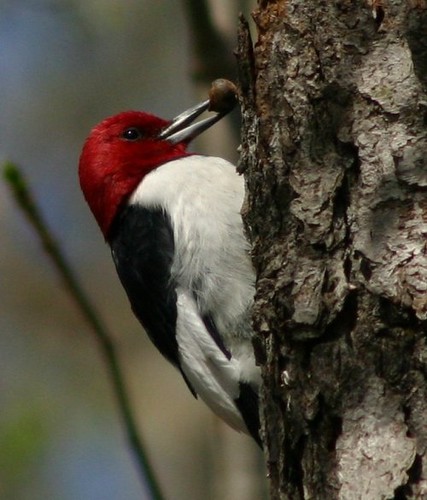
Gwangneung Forest is also located in the area. This place is the best natural forest in Korea because of its "treasury of mountains and forests, as well as a fascinating mix of animals and plant species. The Gwangneung forest, has a total of 841 different sorts of plants settling in the forest with 75 families and 244 species of vertebrates which include 19 kinds designated as the precious natural treasure and 22 kinds designated as the rare animal. Among all of the birds living in the forest, the most famous is the Korean redheaded woodpecker."


I called them at (031)540-1114, but did not find any English speakers there. Also, they appear to be closed on Sundays. Still, it looks nice.

You can also check out Mt. Chuknyeongsan Recreation Forest.

Besides those spots there's also a ton of other neat places are sure to keep you busy for many, many weekends. You've got Mt. Cheonmasan, Mt.Ungilsan [Sujongsa Temple] and Mt. Suraksan for some hiking. There's Bukhangang River where you can hike, pincic and do some water skiing. There's also an annual festival that features crafts, music and other cultural festivities.

While on the topic of skiing, you can hit the slopes in the winter months at Mt.Cheonmasan Ski Resort and Seoul Resort. For rental fees, check this out.

The major tourist attractions are Gwangreung Royal Tomb, Hongreung Royal Tomb, Yureung Royal Tomb, Sareung Royal Tomb, Paldang Resort Complex, Studio Complex, Bamseomdo Island, and Moran Art Gallery. You can also check out the Mongolian Cultural Village.

For all other tourism related info check out Gyeonggi's tourist site, Namyangju's site and even Guri's site. I'd spend some serious time on the Namjangju site though. It's loaded with solid info. In case I forgot anything, take a peek at this site as well.

Now, on to the other stuff...western niceties. One of the only challenges you'll face living outside of Seoul might be the inconvenience of getting food that you want when you want it. As you get used to Korean food, you'll slowly assimilate and your taste buds will change, but when you're really hungry, sometimes Korean food just doesn't cut it.

So, what are your options? Let's start with Costco. Depending on your location in Namyangju, there is a Costco relatively close to you. Here's a bigger picture.


You'll have to pay 35,000 won for a one year membership and then you'll be fine on at least some aspects of western cuisine at home. For restaurants, I would take a look here. There seems to be a pretty good amount of eateries for you. There appears to be one western bar called Oddysee Bar. I don't know anything about it though.

As far as making good friends, I would suggest you get out there and start traveling. Check into Adventure Korea. They're always up to something.

If anybody has any questions, just send me an email at asktheexpat@yahoo.com or leave a comment.

Tuesday, April 21, 2009

Bundang, South Korea: Living and Thriving

Here's the question:


I am arriving in Bundang a week from tomorrow and would like a little more information on the city before I get there. From the research I have conducted myself, it looks like the perfect place for me, but I would love to hear more about it, so I can share the info with my friends and family.

Thank you,
Heather


When moving to a suburb of Seoul, I always think it's smart to take a look at where you might be living in relation to the city, so let's start there.

Here's a google map. (Click here for an interactive road map)


As you can see, it's southeast of Seoul. It's also connected to Gangnam-gu via the Bundang Line. Aside from the newer and constantly-expanding subway line, there are buses that conveniently service the area as well. Expect both to take around 20-30 min to get into Seoul.

Also, the Airport Limousine can be found near Seohyeon and Ori Stations. From there you can get a ride to Incheon Airport for about 12,000 won.

The subway closest to your school appears to be Seohyeon Station.


For Seoul nightlife (restaurants, bars/clubs, shopping) you can get from Seohyeon to Gangnam Station in 40 min; Itaewon in 66 min; Apgujeong in 51 min; and Hongdae in 74 min. If you want to check out transportation all over Korea, then take a look at this Korea Sparkling page or if you want to play with Seoul subway travel times then click here. For a quick list of restaurants, shopping and night spots you can visit Seoul Style.

Of course, you'll be living in Bundang, so let's take a look at what it has to offer. Like Ilsan, it's a well-planned city. Parks, schools, malls, restaurants, golf courses and modern buildings have been woven together to make a clean, safe and attractive city.


I always like to point out parks in the area and Bundang has plenty of small and big ones. Most would say that Bundang Central Park is the nicest and I would probably agree. It's got the basics like most Korean parks: a pond, some sports fields or courts, a place to exercise and some trees. It also has a bungee jumping site. It's a great place to go on a Saturday afternoon with friends. If you're into a biking or walking, try taking a little cruise next to the Tancheon tributary. There are also five water parks along the Tancheon if you're into that. If you're the really adventurous type, you can follow it all the way to Yongin and check out their folk village. If you're into nature or hiking, then take a look at this site to get some ideas. I would seriously recommend several weekend day-hikes. The other parks are smaller, but all of them offer some sort of break from the concrete jungles that envelop the city.

As I mentioned in the post about Ilsan, it's always nice to know where you can get some western food at restaurants, but having a strong base of western flavors and groceries at home is always crucial. Here's a map with the closest Costco from your school. It would take about 25 - 30 min on a bus.


Most of the dining action and a wide variety of drinking establishments can be found around every subway station. Seohyeon and Jeongja stations are good places to start, with the majority of "Western Bars" being at Seohyeon station in the shopping corridors directly outside of Samsung Plaza's two main entrances. You can check out Monkey Beach, Dublin Bar, and Lose Control for starters, but there are plenty more dives in the area. You're also pretty close to a major Korean theme park, Everland, which in located in Yongin.

Overall, you can expect to find a nice, cozy city full of moderately wealthy Koreans and a tight-knit expat community. Like most people, you'll be totally happy in Bundang. I have been to Bundang several times and have never had a bad time. My wife's family lives down there as well and am always up for a quick cruise south. Enjoy!

If you want to see more pictures of Bundang click here and here or for a ton of Bundang-related blogs, click here.

If anybody has any questions, just send me an email at asktheexpat@yahoo.com or leave a comment.

Saturday, April 18, 2009

Seoul or Suburb?

One of the first challenges that prospective teachers and expats have is choosing their location. Should they head to Seoul or maybe just one of its suburbs? What about Busan or Daegu? Are the smaller towns worth it or even manageable? All of these concerns are very valid and let me offer some advice.

Seoul is the center of modern Korea. For the new expat, it's one of the easiest places to assimilate as it is full of Western niceties and conveniences. That said, it should be noted that the other cities are full of wonderful quirks and charm. While all of the cities are Korean, each offers a unique Korean experience.

Still, you need to know what you want and what awaits you when you arrive on the peninsula.

Seoul or Suburb?

This is one of the threads that has been going on over at the ESL Teachers group site.

Are the suburbs of Seoul cheaper than Seoul itself? I'm just looking for a city that is close enough to Seoul where I can be there in 30 min or under...


First of all, let's identify the major suburbs of Seoul, most of which are in Gyeonggi province.

Suwon
Ansan
Anyang
Bucheon
Bundang
Gimpo
Goyang
Guri
Gwacheon
Gwangmyeong
Hanam
Namyangju
Paju
Seongnam
Siheung
Uijeongbu
Uiwang
Yangju
Yongin

All of these places are connected to Seoul by either a train or bus and usually takes anywhere from fifteen minutes to an hour to get to the city, but that doesn't mean you will always be traveling to the city. Most of the suburbs of Seoul have been affected by the megalopolis and have experienced mini-booms that brought many of the big-city conveniences to each town.

Suwon seems to be the most popular suburb within the expat community. It's close to Seoul (45 min), has great public transportation and is noticeably cleaner than the capitol.

The other suburb cities are all very nice and I can research them for you if you'd like.

Is Seoul more expensive than the suburbs?

Some people are under the impression that Seoul, like most big cities, is very expensive. That's partly true. Seoul can be more expensive (housing, shopping, etc...), but isn't necessarily that way. It all depends on what you spend your money on. If you like to drink at bars and clubs, then it most certainly will cost you more. However, if you like to drink at a restaurant or hof, then your bill will be identical. The same goes for groceries. If you like organics then you're going to spend more. Your lifestyle will dictate your expenses.

The only difference is that in a suburb, there are less things to be tempted by. For example, I used to live by a Subway (the sandwich shop) and would eat there a couple times a week. I really appreciated its convenience when I first arrived here, but it was pricey. I was dropping over 20 bucks a week at Subway just because it was there. If it wasn't, I'm sure I would have been eating some Korean food which, of course, is much cheaper.

One more example: I used to live in Daechi-dong which is a predominately residential area in Gangnam-gu. It was a great area to live in. It was quiet, comfortable and close to Coex. Even though it was a residential area with only one bar, I managed to spend loads of money on booze. Now, I live on the main street in Gangnam and am totally surrounded by bars and restaurants, yet I only spend a fraction of what I used to. The bottom line is that the cost is not that different and if you are concerned about money then altering your behavior is more efficient than trying to flee to the suburbs.

What about food?

While it might not seem like it's that big of a deal at first, after awhile you will miss Western food and you will seek it out. This is easy in Seoul, but can be a little tricky in the suburbs. It's there, but chances are that a fast-food chain or chicken hof might be all you come up with.

Is Seoul too crowded?

Yes. Seoul is way too crowded, but than again, all of Gyeonggi is crowded. Over 10,000,000 people live in the province and if you add Seoul in there, you've got over 24,000,000 million people living essentially shoulder to shoulder. If you don't like crowds, I would suggest you stay about from Seoul.

In the end, it's all about preference. Seoul has a lot of cultural icons and events to offer, but that doesn't mean the other cities don't have anything unique or worthwhile. If you prefer a slightly slower lifestyle, then take a look at the suburbs. They are close to mountains, trains and boast cleaner air and streets. You might encounter a few issues assimilating, but you're so close to the city that most problems can be rectified without much stress.

Would I recommend a suburb?

Yes.